
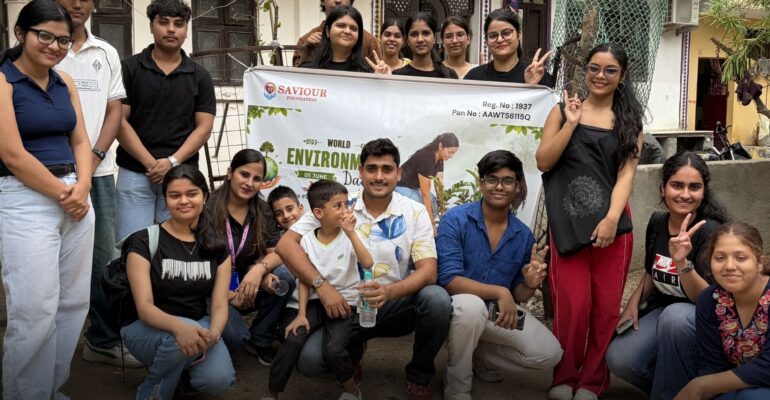
World Environment Day is celebrated every year on 5 June to encourage awareness and action for the protection of the environment. Established by the United Nations in 1972, this global observance has become one of the largest environmental campaigns in the world. Millions of people participate through educational activities, community programs, environmental campaigns, and policy initiatives. The environment provides everything necessary for life, including clean air, safe water, fertile soil, food, medicine, and natural resources.
However, increasing pollution, climate change, deforestation, and biodiversity loss threaten ecological balance. Saviour Foundation recognizes that environmental protection is directly linked to human well-being and sustainable development. Through awareness programs, plantation drives, cleanliness campaigns, and community participation initiatives, the foundation promotes environmental responsibility and inspires individuals to contribute towards a greener future.
Importance of World Environment Day
World Environment Day serves as an important reminder that environmental conservation is everyone’s responsibility. Economic development and environmental sustainability must progress together. The day creates opportunities for governments, institutions, civil society organizations, and individuals to discuss environmental challenges and implement solutions. Environmental degradation affects public health, agriculture, water resources, livelihoods, and future generations. Raising awareness encourages sustainable practices such as reducing waste, conserving energy, protecting forests, and promoting renewable resources. Through collective action, communities can create positive environmental change and ensure long-term sustainability.
Global Environmental Challenges
The world currently faces multiple environmental challenges. Climate change is causing rising global temperatures, melting glaciers, sea-level rise, and extreme weather events. Air pollution contributes to millions of premature deaths every year and affects respiratory and cardiovascular health. Deforestation destroys wildlife habitats and reduces the planet’s ability to absorb carbon dioxide. Plastic pollution contaminates rivers, oceans, and soil, affecting ecosystems and food chains. Water scarcity has become a serious issue in many regions due to overconsumption, pollution, and climate-related disruptions. Addressing these challenges requires international cooperation, scientific innovation, environmental education, and community participation.
Join Hands for Change, Hope, and Humanity
Environmental Data and Statistics
Environmental statistics highlight the urgency of action. Global temperatures have increased by approximately 1.1 degrees Celsius above pre-industrial levels. Around 7 million premature deaths are linked to air pollution annually. More than 400 million tonnes of plastic waste are produced worldwide each year. Nearly 10 million hectares of forests are lost annually. Scientists estimate that around one million plant and animal species are at risk of extinction. Renewable energy sources are rapidly expanding, yet fossil fuels still contribute significantly to greenhouse gas emissions. These figures demonstrate the need for stronger environmental policies and public engagement.
Environmental Issues in India
India is home to diverse ecosystems and rich biodiversity, but it also faces environmental pressures associated with population growth, urbanization, and industrialization. Air pollution remains a significant concern in several cities. Water pollution affects rivers, lakes, and groundwater resources. Waste management challenges contribute to environmental degradation. Despite these concerns, India has made progress in renewable energy development, afforestation programs, and environmental awareness campaigns. Community-based environmental action is essential for sustaining these achievements and addressing future challenges.
Role of Saviour Foundation
Saviour Foundation actively works to promote environmental awareness and sustainable living practices. The organization believes that environmental protection begins with education and community involvement. Through workshops, seminars, awareness rallies, and outreach activities, the foundation informs citizens about climate change, pollution prevention, biodiversity conservation, and waste management. Saviour Foundation also encourages volunteer participation, empowering young people to become environmental leaders. By fostering community engagement, the foundation contributes to long-term environmental improvement and social responsibility.
Tree Plantation and Green Development
Tree plantation is among the most effective environmental conservation strategies. Trees absorb carbon dioxide, release oxygen, improve air quality, regulate temperature, and support biodiversity. They help prevent soil erosion and improve water retention. Saviour Foundation organizes plantation drives involving students, teachers, community members, and volunteers. These activities not only increase green cover but also strengthen environmental awareness. Plantation programs create lasting benefits by improving ecological balance and contributing to climate change mitigation efforts.
Waste Management and Plastic Reduction
Improper waste disposal creates environmental and public health problems. Landfills produce greenhouse gases, while plastic waste pollutes ecosystems and threatens wildlife. Sustainable waste management focuses on reducing, reusing, and recycling materials. Waste segregation at the source improves recycling efficiency and reduces landfill burden. Saviour Foundation conducts awareness programs that encourage responsible waste disposal and reduced use of single-use plastics. Communities that adopt sustainable waste management practices contribute significantly to environmental protection.
Water Conservation
Water is essential for life, agriculture, industry, and ecosystem functioning. However, growing demand and climate variability have increased pressure on freshwater resources. Water conservation involves efficient usage, rainwater harvesting, leak prevention, and protection of natural water bodies. Saviour Foundation promotes water conservation awareness through educational activities and community engagement. Conserving water today helps secure resources for future generations while maintaining ecological stability.
Environmental Education and Youth Engagement
Environmental education empowers individuals to understand environmental challenges and adopt sustainable behaviors. Young people are particularly important because they will shape future environmental policies and practices. Schools and colleges play a vital role in promoting environmental literacy through eco-clubs, projects, campaigns, and conservation activities. Saviour Foundation engages youth through awareness programs and volunteer opportunities that encourage environmental leadership and community service.
Individual Responsibility
Environmental protection requires action at the individual level. People can reduce environmental impact by conserving energy, reducing waste, using reusable products, planting trees, and supporting sustainable transportation. Small daily actions, when multiplied across communities, create meaningful environmental benefits. Individuals also have a responsibility to educate others and advocate for sustainable practices. Collective responsibility strengthens environmental conservation efforts and supports long-term sustainability.
Conclusion
World Environment Day is more than a celebration; it is a call to action. Environmental challenges such as climate change, pollution, biodiversity loss, and resource depletion require urgent attention. Governments, organizations, communities, and individuals must work together to create sustainable solutions. Saviour Foundation remains committed to environmental awareness, conservation, and community engagement. By promoting sustainable practices and encouraging collective responsibility, the foundation contributes to a cleaner, healthier, and greener future. Every individual has the power to make a difference, and together we can protect our planet for generations to come.
Frequently Asked Questions (FAQs)
What is World Environment Day?
World Environment Day is a global environmental awareness event celebrated every year on 5 June to encourage action for environmental protection.
Why is World Environment Day important?
It raises awareness about environmental challenges and motivates individuals, communities, and governments to adopt sustainable practices.
Who started World Environment Day?
The United Nations established World Environment Day in 1972 during the Stockholm Conference on the Human Environment.
What are the major environmental challenges today?
Climate change, air pollution, water pollution, plastic waste, biodiversity loss, and deforestation are major global concerns.
How does climate change affect people?
Climate change contributes to extreme weather events, food insecurity, health risks, and economic losses.
Why are trees important?
Trees absorb carbon dioxide, produce oxygen, support biodiversity, improve air quality, and help regulate climate.
What is plastic pollution?
Plastic pollution refers to the accumulation of plastic waste in the environment, affecting ecosystems and wildlife.
How can water be conserved?
Water can be conserved through rainwater harvesting, efficient use, leak prevention, and protection of water resources.
What role does Saviour Foundation play?
The foundation promotes environmental awareness, plantation drives, cleanliness campaigns, and sustainable development initiatives.
How can students help protect the environment?
Students can participate in eco-clubs, recycling programs, plantation drives, awareness campaigns, and sustainable lifestyle practices.